
When it's time for a new roof on your New York City building, one of the first decisions you'll face is whether to go with a flat roof or a pitched roof. Both have their advantages and drawbacks, and the right choice depends on your building type, budget, climate considerations, and long-term maintenance plans.
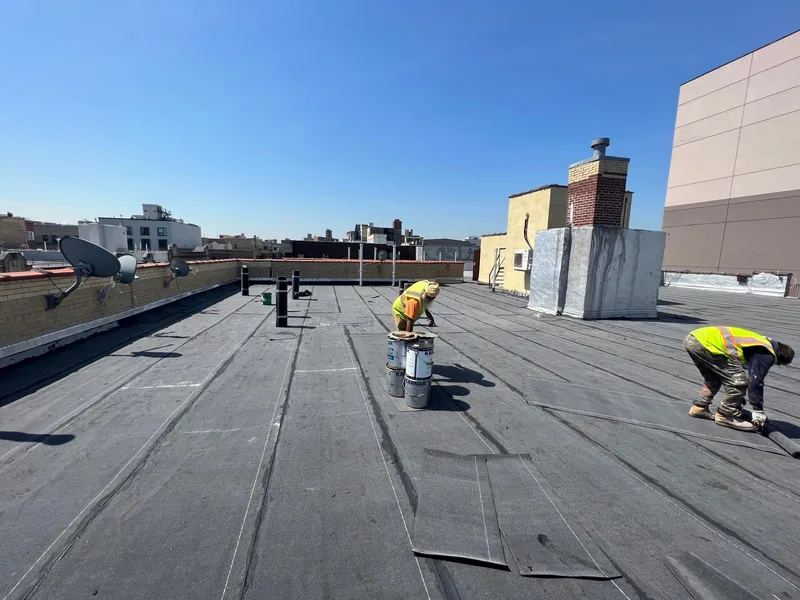
Flat Roofs: The NYC Standard - Flat roofs are the most common roofing style in New York City, especially for commercial and multi-family residential buildings. Despite their name, flat roofs actually have a slight slope (typically ¼ inch per foot) to allow water drainage.
The most popular flat roofing materials include modified bitumen, EPDM rubber membrane, and TPO/PVC single-ply membranes. Modified bitumen is the traditional choice for NYC flat roofs, known for its durability and proven performance in our climate. EPDM rubber offers excellent waterproofing at a lower cost. TPO and PVC are newer options that offer superior energy efficiency and reflectivity.
Advantages of flat roofs: Lower installation cost, easier access for maintenance and equipment, can support rooftop HVAC units and solar panels, maximizes usable space, easier to install and repair. Disadvantages: Shorter lifespan (15-25 years), requires regular maintenance and inspection, more prone to ponding water issues, and limited aesthetic appeal.
Pitched Roofs: Traditional and Durable - Pitched roofs are more common on single-family homes and some low-rise residential buildings. They use the force of gravity to shed water and snow, which can mean less maintenance and fewer leak issues over time.
Common pitched roof materials include asphalt shingles, slate, tile, and metal. Asphalt shingles are the most economical option with a 20-30 year lifespan. Slate is the premium choice - expensive but can last 100+ years with proper maintenance. Metal roofing offers excellent durability, energy efficiency, and a modern aesthetic.
Advantages of pitched roofs: Longer lifespan, better natural drainage, attic/storage space, more aesthetically diverse, handles snow loads better. Disadvantages: Higher installation cost, more complex repairs, limited equipment mounting options, not suitable for all building types.
Our Recommendation - For most NYC commercial and multi-family buildings, a modern flat roofing system (particularly TPO or modified bitumen) offers the best balance of cost, performance, and practicality. For residential properties where aesthetics and longevity are priorities, a quality pitched roof with architectural shingles or slate is an excellent investment.
Whatever your building requires, Doon Construction Corporation can help you choose the right roofing system. Contact us at (718) 216-2725 for a free roof inspection and estimate.